
The API-First Approach: Why Leading Companies Build APIs Before Interfaces
API-first development is reshaping how companies build software. Learn the principles, benefits, and implementation patterns behind this modern approach.
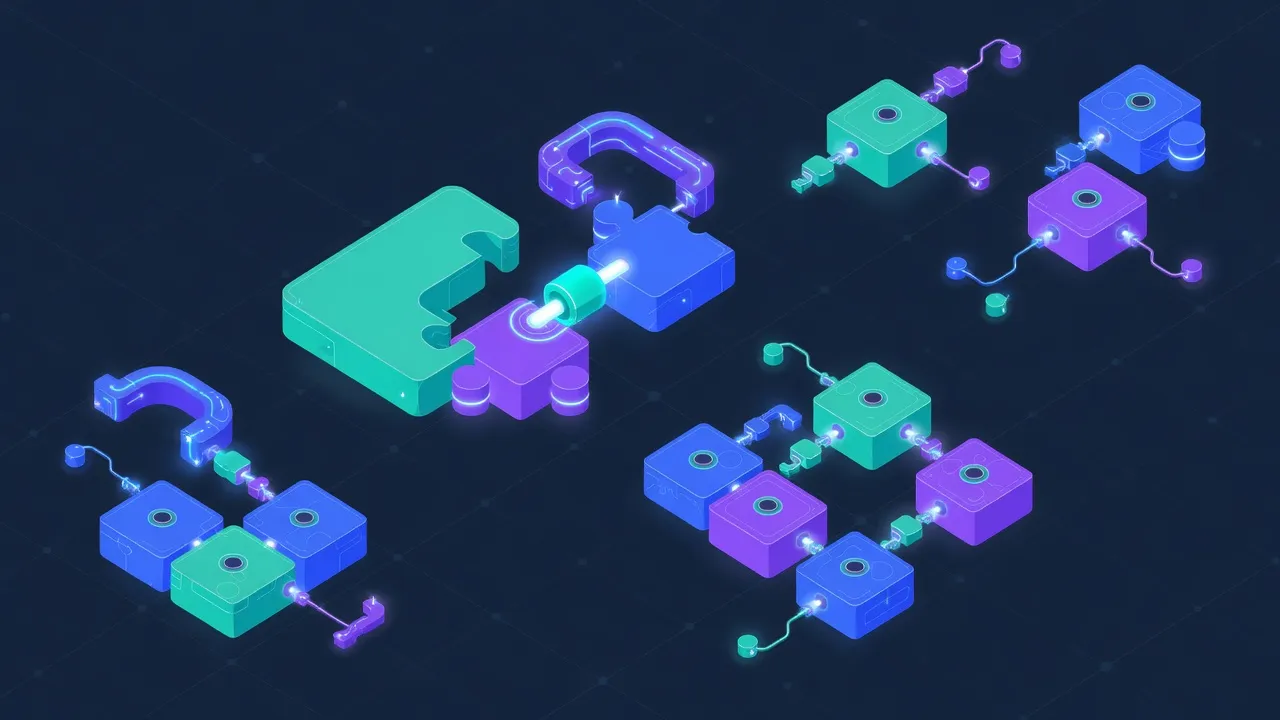
APIs Are Products, Not Plumbing
The most successful software companies in the world — Stripe, Twilio, Shopify — share a common trait: they treat their APIs as first-class products. The API-first approach means designing the API contract before writing any implementation code, ensuring that every system, team, and future integration builds on a stable, well-documented foundation. This methodology is no longer a luxury for platform companies. It is essential for any business building interconnected digital systems that need to scale.
If you have ever struggled with a mobile app that does not match the web experience, a third-party integration that breaks after every release, or frontend and backend teams blocking each other's progress, API-first development solves these problems by design.
The best time to adopt API-first was at the start of your project. The second-best time is now, before your next breaking change costs you a customer.
What Is API-First Development?
API-first development is a methodology where the API specification is designed, reviewed, and agreed upon before any implementation work begins. The API contract becomes the single source of truth that all teams — frontend, backend, mobile, QA, and external partners — build against.
This inverts the traditional approach where APIs are an afterthought, bolted onto existing backend code and shaped by database schemas rather than consumer needs. In an API-first workflow:
- Stakeholders agree on the API contract (what data goes in, what comes out, what errors are possible)
- The contract is documented in a machine-readable specification (OpenAPI, GraphQL SDL)
- Mock servers are generated from the specification, enabling parallel development
- Frontend, mobile, and backend teams build simultaneously against the contract
- Contract tests verify that implementations match the specification
- The API is versioned and maintained as a product, with its own lifecycle
This approach fundamentally changes how teams collaborate, how quickly features ship, and how reliably systems integrate.
API-First vs Code-First: What Changes
The differences between API-first and code-first development are practical, not just philosophical. Here is how each phase of development changes.
Design Phase
Code-first: A backend developer builds an endpoint, documents it in a wiki or Swagger annotation, and shares it with the frontend team. The frontend team discovers edge cases, requests changes, and both teams iterate — often through a slow cycle of PRs, Slack messages, and meetings.
API-first: Stakeholders (product, frontend, backend, mobile) review the API specification together before any code is written. Disagreements about data shapes, naming conventions, and error handling are resolved in a document, not in pull requests. Mock servers let everyone validate the design against real use cases.
Development Phase
Code-first: Frontend teams wait for backend endpoints to be ready. This creates sequential dependencies and idle time. When the backend delivers an endpoint, its shape often does not match frontend expectations, triggering rework.
API-first: Frontend and backend teams work in parallel from day one. The frontend builds against mock servers generated from the specification. The backend implements against the same specification. When both sides are done, integration is a formality because the contract was agreed upon upfront.
Testing Phase
Code-first: Integration tests are written after both sides are built, discovering contract mismatches late in the cycle.
API-first: Contract tests run continuously, verifying that implementations conform to the specification. Consumer-driven contract testing ensures that API changes do not break existing consumers.
| Aspect | Code-First | API-First |
|---|---|---|
| Design input | Backend developer | Cross-functional stakeholders |
| Specification | Generated from code (afterthought) | Written first (source of truth) |
| Parallel development | Limited (sequential dependencies) | Full (mock servers from day one) |
| Contract validation | Manual / late integration testing | Automated contract testing |
| Documentation | Often stale | Always current (generated from spec) |
| Breaking change risk | High (discovered in production) | Low (caught in CI) |
The Business Case for API-First
API-first development is not just an engineering preference. It delivers measurable business value across multiple dimensions.
Faster Parallel Development
When frontend and backend teams can work simultaneously, feature delivery accelerates by 30-50%. There is no "waiting for the API" phase. Mobile developers are not blocked by web developers. External partners can start integration work before your internal implementation is complete.
For businesses working with an integration engineering partner, this parallel development capability is transformative. It compresses timelines and reduces the coordination overhead that slows most projects.
Better Partner and Third-Party Integrations
If your business relies on third-party integrations — payment processors, shipping providers, CRM systems, marketing platforms — a well-designed API layer makes these integrations predictable and maintainable. Partners build against your documented API, not against the quirks of your internal implementation.
Future-Proofing Your Technology Stack
A well-designed API layer decouples your business logic from any specific frontend or consumer. Today, your API serves a web application. Tomorrow, it serves a mobile app, an AI agent like Connekz, an IoT device, or a partner's platform — all without changing the backend.
This flexibility is particularly valuable for businesses planning mobile application development. When the API is designed independently of the web frontend, the mobile app gets the same first-class data access without workarounds or BFF (Backend for Frontend) layers.
Reduced Rework and Miscommunication
The most expensive bugs are specification bugs — building the wrong thing. API-first development forces specification alignment before code is written. The cost of changing a YAML file is trivially small compared to refactoring implemented code across multiple teams and codebases.
Implementation Patterns
Moving from theory to practice requires specific tools, patterns, and workflows. Here is how to implement API-first development in your organisation.
OpenAPI Specification Design
The OpenAPI Specification (formerly Swagger) is the industry standard for describing REST APIs. Your API specification should be the first artifact created for any new feature or service.
# openapi.yaml — Example specification for a booking API
openapi: 3.1.0
info:
  title: Booking API
  version: 2.0.0
  description: API for managing customer bookings and appointments

paths:
  /bookings:
    post:
      operationId: createBooking
      summary: Create a new booking
      tags:
        - Bookings
      requestBody:
        required: true
        content:
          application/json:
            schema:
              $ref: '#/components/schemas/CreateBookingRequest'
      responses:
        '201':
          description: Booking created successfully
          content:
            application/json:
              schema:
                $ref: '#/components/schemas/BookingResponse'
        '409':
          description: Time slot no longer available
          content:
            application/json:
              schema:
                $ref: '#/components/schemas/ErrorResponse'
        '422':
          description: Validation error
          content:
            application/json:
              schema:
                $ref: '#/components/schemas/ValidationErrorResponse'

components:
  schemas:
    CreateBookingRequest:
      type: object
      required:
        - serviceType
        - dateTime
        - customerName
        - customerEmail
      properties:
        serviceType:
          type: string
          enum:
            - consultation
            - follow-up
            - treatment
        dateTime:
          type: string
          format: date-time
          description: ISO 8601 date-time for the appointment
        customerName:
          type: string
          minLength: 2
          maxLength: 100
        customerEmail:
          type: string
          format: email
        notes:
          type: string
          maxLength: 500

    BookingResponse:
      type: object
      properties:
        id:
          type: string
          format: uuid
        status:
          type: string
          enum:
            - confirmed
            - pending
            - cancelled
        serviceType:
          type: string
        dateTime:
          type: string
          format: date-time
        createdAt:
          type: string
          format: date-time
This specification is machine-readable. From it, you can generate mock servers, client SDKs, validation middleware, and interactive documentation — all automatically.
Mock-First Development
Once the specification is written, generate mock servers so that consumer teams can start building immediately.
# Generate a mock server from your OpenAPI spec using Prism
npx @stoplight/prism-cli mock openapi.yaml --port 4010

# Or use MSW (Mock Service Worker) for frontend testing
# msw generates handlers from OpenAPI specs
npx msw-auto-mock openapi.yaml --output ./src/mocks/handlers.ts
Mock servers return realistic responses based on the schemas in your specification. Frontend developers build against these mocks, confident that the real API will return data in the same shape.
Tip
Invest time in adding example values to your OpenAPI schemas. Mocks generated from well-annotated specifications are realistic enough that frontend teams can complete full feature development without ever touching the real backend.
Contract Testing with Pact
Contract testing verifies that API producers and consumers agree on the interface. Pact is the most widely adopted tool for consumer-driven contract testing.
// Consumer-side contract test (frontend/mobile team writes this)
import { PactV4 } from '@pact-foundation/pact';

const provider = new PactV4({
  consumer: 'BookingWebApp',
  provider: 'BookingAPI',
});

describe('Booking API Contract', () => {
  it('creates a booking successfully', async () => {
    await provider
      .addInteraction()
      .given('available time slot exists')
      .uponReceiving('a request to create a booking')
      .withRequest('POST', '/bookings', (builder) => {
        builder
          .headers({ 'Content-Type': 'application/json' })
          .jsonBody({
            serviceType: 'consultation',
            dateTime: '2026-02-17T14:30:00Z',
            customerName: 'Sarah Chen',
            customerEmail: 'sarah@example.com',
          });
      })
      .willRespondWith(201, (builder) => {
        builder.jsonBody({
          id: provider.like('f47ac10b-58cc-4372-a567-0e02b2c3d479'),
          status: 'confirmed',
          serviceType: 'consultation',
          dateTime: '2026-02-17T14:30:00Z',
        });
      })
      .executeTest(async (mockServer) => {
        const response = await createBooking(mockServer.url, {
          serviceType: 'consultation',
          dateTime: '2026-02-17T14:30:00Z',
          customerName: 'Sarah Chen',
          customerEmail: 'sarah@example.com',
        });
        expect(response.status).toBe('confirmed');
      });
  });
});
The consumer team writes these contract tests. The provider team runs them in their CI pipeline. If a backend change would break a consumer's expectations, the build fails before the change reaches production.
API Versioning Strategies
APIs evolve. Versioning ensures that existing consumers continue to work while new consumers benefit from improvements. There are three common strategies:
URL path versioning (/v1/bookings, /v2/bookings): The simplest and most explicit approach. Easy to route, easy to understand, easy to deprecate. This is what we recommend for most REST APIs.
Header versioning (Accept: application/vnd.api.v2+json): Keeps URLs clean but is harder to discover and test. Better suited for APIs with sophisticated consumers.
Query parameter versioning (/bookings?version=2): Rarely recommended. It conflates versioning with filtering and creates confusing cache behaviour.
Regardless of strategy, follow these rules:
- Never break an existing version without a deprecation period
- Version the entire API, not individual endpoints
- Provide migration guides for every major version bump
- Monitor usage of deprecated versions and communicate sunset timelines
Rate Limiting and Security
Every production API needs rate limiting and authentication. These are not optional — they are requirements.
// Rate limiting middleware example (Express/H3)
import { createRateLimiter } from './middleware/rate-limiter';

const apiRateLimiter = createRateLimiter({
  windowMs: 60 * 1000, // 1 minute
  maxRequests: 100,     // 100 requests per window
  keyGenerator: (req) => req.headers['x-api-key'] || req.ip,
  onLimitReached: (req, res) => {
    res.status(429).json({
      error: 'rate_limit_exceeded',
      message: 'Too many requests. Please retry after the window resets.',
      retryAfter: res.getHeader('Retry-After'),
    });
  },
});
For authentication, the choice between API keys, OAuth 2.0, and JWT depends on your consumer types:
- API keys: Simple, suitable for server-to-server communication where the consumer is trusted.
- OAuth 2.0: Required when third-party applications need delegated access to user data. The authorization code flow with PKCE is the current standard for mobile and web applications.
- JWT (JSON Web Tokens): Efficient for stateless authentication in microservice architectures. Short-lived access tokens with refresh token rotation provide security without constant database lookups.
Info
API security is not just authentication. It includes input validation, output encoding, CORS configuration, request size limits, and protection against common attacks (injection, BOLA, mass assignment). The OWASP API Security Top 10 is required reading for any team building production APIs.
API Documentation as a Product
An API without good documentation is an API nobody will use. Treat your documentation as a product with its own quality standards, user experience, and maintenance schedule.
What Great API Documentation Includes
- Getting started guide: A developer should be able to make their first successful API call within 5 minutes of reading your documentation.
- Authentication guide: Clear instructions for obtaining and using credentials, with copy-paste examples.
- Interactive reference: Every endpoint documented with try-it-out functionality. Tools like Stoplight, Redocly, and Scalar generate these from OpenAPI specifications.
- Code examples: In every language your consumers use. At minimum: JavaScript, Python, and cURL.
- Error reference: Every possible error code documented with the cause and the recommended resolution.
- Changelog: What changed in each version, with migration instructions for breaking changes.
- SDKs and client libraries: Auto-generated from your OpenAPI specification and published to npm, PyPI, and other package registries.
For businesses building cloud-native platforms, a developer portal with interactive API documentation is not a nice-to-have — it is a competitive advantage. Partners and developers choose platforms that are easy to integrate with.
Common Mistakes to Avoid
After designing and reviewing dozens of APIs, we see the same mistakes repeatedly. Here are the most damaging ones.
Designing APIs Around Database Schemas
Your API should model your business domain, not your database tables. If your API response mirrors a database JOIN with nested foreign keys and auto-increment IDs, you have coupled your public interface to your internal implementation. Every database migration becomes a potential breaking API change.
Inconsistent Naming Conventions
Pick a convention and enforce it everywhere. If you use camelCase for property names, use it consistently across every endpoint. If you use plural nouns for collection resources (/bookings, not /booking), do not suddenly switch to singular elsewhere. Inconsistency forces consumers to guess, which means bugs.
Missing Pagination
Any endpoint that returns a list will eventually return a list too large to process in a single response. Design pagination into your list endpoints from day one — even if your current dataset is small.
// Cursor-based pagination response
interface PaginatedResponse<T> {
  data: T[];
  pagination: {
    cursor: string | null;
    hasMore: boolean;
    totalCount: number;
  };
}

// Usage: GET /bookings?cursor=abc123&limit=25
Cursor-based pagination is preferred over offset-based for production APIs. It handles insertions and deletions gracefully and performs better on large datasets.
Breaking Changes Without Versioning
Adding a new optional field to a response is not a breaking change. Removing a field, changing a field's type, or altering error response formats are breaking changes. If you do not version your API, every breaking change becomes an incident for every consumer simultaneously.
Ignoring Error Design
Generic 500 Internal Server Error responses are not acceptable. Every error should include a machine-readable error code, a human-readable message, and enough context for the consumer to take corrective action.
{
  "error": {
    "code": "BOOKING_SLOT_UNAVAILABLE",
    "message": "The requested time slot is no longer available.",
    "details": {
      "requestedDateTime": "2026-02-17T14:30:00Z",
      "nextAvailableSlots": [
        "2026-02-17T15:00:00Z",
        "2026-02-17T16:30:00Z",
        "2026-02-18T09:00:00Z"
      ]
    }
  }
}
This error response tells the consumer exactly what went wrong and what to do next. It transforms an error from a dead end into a continuation of the user flow.
Getting Started with API-First
If your organisation currently follows a code-first approach, transitioning to API-first does not require a big-bang migration. Start with your next new service or feature:
- Write the OpenAPI specification first. Before any implementation code. Share it with all stakeholders for review.
- Generate mock servers. Let frontend and mobile teams start building immediately.
- Implement the backend against the specification. The spec is the acceptance criteria.
- Add contract tests to your CI pipeline. Catch specification drift automatically.
- Publish interactive documentation. Make it easy for everyone to understand and use the API.
Once your team experiences the speed and reliability of API-first development on one project, the approach tends to spread organically. Teams that have worked this way rarely want to go back.
For organisations with existing APIs that need restructuring, a web development engagement can help you introduce API-first practices incrementally — redesigning your most critical APIs first and building the tooling and workflows that make the approach sustainable.
Need to design or rebuild your API layer? Talk to our integration engineering team about building APIs that scale with your business.
Written by
CNEX Team
Building the next generation of enterprise software at CNEX. Passionate about AI, cloud-native architecture, and elegant solutions to complex problems.
Related articles
How Auckland Clinics Lose Bookings Between 5pm and 9am (With the Maths)
Most Auckland clinics only answer the phone for about a quarter of the week. Here's the maths on what that costs, the four common leak points, and what to fix before you buy anything.
What an AI Receptionist Actually Costs in NZ (2026) — and When It's Worth It
Real subscription and done-for-you pricing from named NZ/AU providers, the hidden costs nobody quotes, a worked example for a clinic and a builder, and when you shouldn't buy one at all.
Why Most NZ Businesses Lose the Leads They Already Paid For
You're spending money to generate leads. But if your follow-up is broken, you're paying for enquiries that go nowhere. Here's what's actually happening — and how to fix it.