
Why Most Digital Ad Campaigns Underperform and How to Fix It
Boosting posts is not a strategy. Learn how platform-level optimisation, audience engineering, and dynamic creative deliver real marketing ROI.
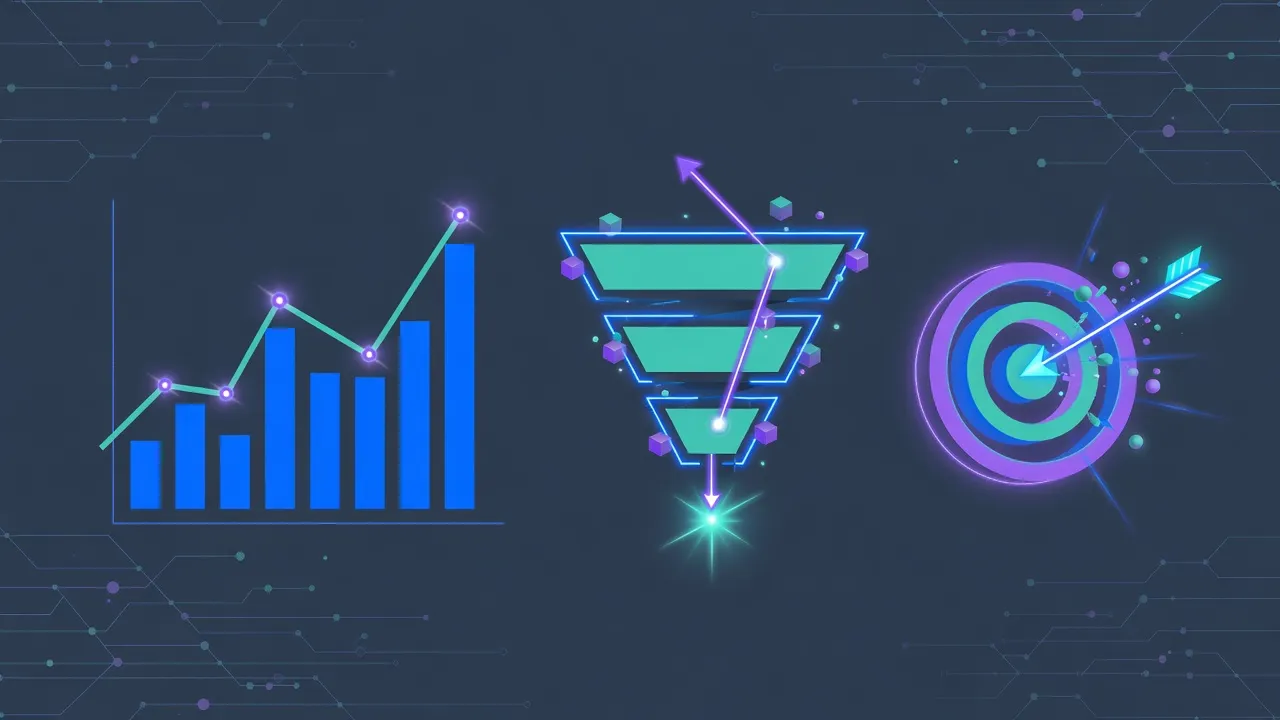
The Uncomfortable Truth About Your Ad Spend
Most digital ad campaigns underperform because businesses treat advertising platforms like billboards — put up a message, hope the right people see it, and measure success by how many eyeballs it reached. The result is predictable: an estimated 40-60% of digital ad spend is wasted on impressions that will never convert, audiences that will never buy, and creative that fails to compel action.
This is not a platform problem. Meta, Google, and TikTok have built extraordinarily sophisticated machine learning systems designed to find your best customers. The problem is that most businesses never give these systems what they need to work effectively. They boost posts instead of building campaigns. They optimise for clicks instead of conversions. They launch a single ad and wonder why it does not perform.
If your digital marketing efforts feel like they are burning money without delivering results, this guide will show you exactly what is going wrong and how to fix it. The difference between a campaign that wastes budget and one that drives profitable growth is not luck — it is architecture.
The "Boost Post" Trap
Boosting a post is the fast food of digital advertising: quick, easy, and ultimately bad for you. When you hit the "Boost" button on Facebook or Instagram, you are choosing convenience over control — and paying a premium for worse results.
The boost post feature optimises for engagement by default. It shows your content to people who are likely to like, comment, or share. But here is the critical insight most businesses miss: the people who engage with your posts and the people who buy your products are often entirely different audiences. A post with 500 likes and zero sales is not a success. It is an expensive vanity metric.
Why Vanity Metrics Mislead
Reach, impressions, and engagement rate feel good on a monthly report. They create the illusion of progress. But they do not correlate with revenue in any reliable way. Consider these scenarios:
- High reach, low conversions: Your ad is being shown to people who will never buy. The algorithm is doing exactly what you asked — maximising reach — but you asked for the wrong thing.
- High engagement, low conversions: Your creative is entertaining but not persuasive. People enjoy watching your video but have no intention of purchasing.
- Low cost per click, low conversions: Cheap clicks are easy to buy. They are also worthless if the people clicking have no purchase intent.
The metrics that actually matter are cost per acquisition (CPA), return on ad spend (ROAS), customer lifetime value (CLV) relative to acquisition cost, and conversion rate at each funnel stage. Everything else is context at best and distraction at worst.
Info
A useful rule of thumb: if a metric does not appear on your profit and loss statement, it should not be your primary optimisation target. Likes do not pay invoices. Revenue does.
How Modern Ad Platforms Actually Work
To run effective campaigns, you need to understand the machinery you are working with. Modern advertising platforms are not billboards — they are real-time auction systems powered by machine learning. Understanding this changes everything about how you should approach campaign structure.
Machine Learning Auction Systems
When you create a campaign on Meta, Google, or TikTok, you are not buying ad placements directly. You are entering a real-time auction that runs billions of times per day. For every impression opportunity, the platform evaluates all eligible ads and selects the one that maximises its objective function — typically a combination of your bid, estimated action rate, and ad quality.
This means the platform's algorithm is your most important partner. It is trying to find the best audience for your ad, but it needs data to learn. The more conversion data you feed it, the smarter it gets. The less data you provide, the more it guesses — and guessing is expensive.
The Feedback Loop
Every successful campaign relies on a virtuous cycle:
- Your pixel fires a conversion event (purchase, lead submission, signup).
- The platform records the profile of the person who converted (demographics, interests, behaviour patterns, device data — hundreds of signals).
- The algorithm updates its model, learning which types of people are most likely to convert for your specific offer.
- Future impressions are served to people who resemble your converters, improving efficiency over time.
This is why the first few days of a campaign are always the most expensive. The algorithm is in "learning mode," exploring different audience segments to gather data. Premature changes during this phase — adjusting budgets, swapping creative, narrowing targeting — reset the learning process and waste the data you have already paid for.
Why Quality Signals Matter
The platform's algorithm is only as good as the signals you give it. If you are optimising for link clicks, the algorithm finds clickers. If you are optimising for purchases with accurate conversion tracking, the algorithm finds buyers. The signal you choose to optimise for is arguably the single most important decision in your entire campaign setup.
This is where most businesses go wrong. They set up a campaign optimised for "traffic" and then wonder why nobody converts. The algorithm delivered exactly what was requested — people who click links — not people who buy products.
The 4 Pillars of High-Performing Campaigns
Consistently profitable digital advertising rests on four pillars. Weakness in any one of them will undermine the others. Mastering all four is what separates brands that scale profitably from those that simply spend more.
1. Audience Architecture
Audience architecture is the strategic construction of targeting layers that guide the platform's algorithm toward your most valuable potential customers. It is not about finding one perfect audience — it is about building an interconnected system of audiences that work together across the funnel.
Custom audiences are built from your first-party data: customer email lists, website visitors, app users, video viewers, and social engagers. These are your warmest prospects and your most valuable seed data.
Lookalike audiences use your custom audiences as a blueprint. The platform analyses the profiles of your existing customers and finds new people who share similar characteristics. The quality of your lookalike depends entirely on the quality of your seed audience. A lookalike built from your top 1,000 customers by lifetime value will dramatically outperform one built from all website visitors.
Exclusions are just as important as inclusions. Exclude existing customers from acquisition campaigns. Exclude recent converters from retargeting. Exclude people who have visited your site 10 times without converting — they are probably not going to. Smart exclusions prevent wasted spend and reduce audience fatigue.
Layered targeting combines demographic, interest, and behavioural signals to create highly specific audience segments. Rather than targeting "small business owners," target "small business owners who are actively researching CRM software and have visited competitor websites in the past 30 days."
2. Conversion Infrastructure
Conversion infrastructure is the technical foundation that enables accurate measurement and algorithm optimisation. Without it, you are flying blind and the platform is guessing. Getting this right is not glamorous, but it is the single highest-leverage improvement most businesses can make.
Pixel implementation must be correct and comprehensive. The pixel should fire on every meaningful conversion event: page views, add to cart, initiate checkout, purchase, lead submission. Each event should pass relevant parameters (value, currency, content ID) so the platform can optimise for value, not just volume.
Conversions API (CAPI) is server-side tracking that supplements your pixel. With browser privacy changes, ad blockers, and iOS restrictions degrading pixel accuracy, CAPI has become essential. It sends conversion data directly from your server to the platform, bypassing browser limitations entirely.
// Example: Server-side conversion event sent via Meta Conversions API
import { createHash } from 'crypto';

interface ConversionEvent {
  eventName: string;
  eventTime: number;
  userData: {
    email: string;
    phone?: string;
    clientIpAddress: string;
    clientUserAgent: string;
    fbc?: string; // Facebook click ID from cookie
    fbp?: string; // Facebook browser ID from cookie
  };
  customData: {
    value: number;
    currency: string;
    contentIds?: string[];
    contentType?: string;
  };
}

async function sendConversionEvent(event: ConversionEvent): Promise<void> {
  const hashedEmail = createHash('sha256')
    .update(event.userData.email.toLowerCase().trim())
    .digest('hex');

  const payload = {
    data: [
      {
        event_name: event.eventName,
        event_time: event.eventTime,
        action_source: 'website',
        user_data: {
          em: [hashedEmail],
          client_ip_address: event.userData.clientIpAddress,
          client_user_agent: event.userData.clientUserAgent,
          fbc: event.userData.fbc,
          fbp: event.userData.fbp,
        },
        custom_data: {
          value: event.customData.value,
          currency: event.customData.currency,
          content_ids: event.customData.contentIds,
          content_type: event.customData.contentType,
        },
      },
    ],
  };

  await fetch(
    `https://graph.facebook.com/v19.0/${PIXEL_ID}/events?access_token=${ACCESS_TOKEN}`,
    {
      method: 'POST',
      headers: { 'Content-Type': 'application/json' },
      body: JSON.stringify(payload),
    },
  );
}
Attribution windows determine how much credit the platform gives itself for a conversion. A 7-day click, 1-day view window (Meta's default) means the platform claims credit for any purchase that happens within 7 days of a click or 1 day of a view. Understanding your attribution settings is critical for accurate business analysis and budget decisions.
3. Dynamic Creative Optimisation
Dynamic creative optimisation (DCO) is the practice of testing multiple creative variations simultaneously and letting the platform's algorithm determine which combination performs best for each audience segment. Instead of guessing which headline, image, and call-to-action will work, you test them all.
Responsive ad formats allow you to upload multiple headlines, descriptions, images, and videos. The platform assembles different combinations and tests them in real time. A single responsive ad set might test 50 or more unique combinations, finding winners faster than any human could.
Structured A/B testing goes beyond responsive ads. Test fundamentally different creative concepts against each other: educational content versus testimonial-driven content, product-focused versus lifestyle imagery, short-form versus long-form copy. Use the platform's built-in A/B testing tools to ensure statistical significance.
Format diversification means running ads across multiple formats: static images, carousels, short-form video (Reels, Shorts, TikTok), long-form video, and collection ads. Different people respond to different formats, and the algorithm can only optimise across formats if you provide them.
Tip
The 80/20 rule for creative testing: spend 80% of your budget on proven winners and 20% on new creative tests. This ensures consistent performance while continuously discovering new high-performers. When a test outperforms the control, promote it to the "winner" pool and introduce a new test.
4. Full-Funnel Strategy
A full-funnel strategy recognises that not everyone is ready to buy right now. The most profitable campaigns guide potential customers through a deliberate journey from awareness to purchase, with appropriate messaging at each stage.
Awareness (top of funnel): Reach new audiences with content that educates, entertains, or inspires. The goal is not sales — it is making a memorable first impression. Video content performs exceptionally well here because it allows the platform to build retargeting audiences based on watch time.
Consideration (middle of funnel): Retarget people who engaged with your awareness content. Show them more detailed information: case studies, product demonstrations, comparisons, reviews. This is where you build trust and address objections.
Conversion (bottom of funnel): Retarget people who have shown strong purchase intent — visited product pages, added to cart, started checkout. Use urgency-driven creative, social proof, and clear calls to action. This audience is small but highly valuable.
Retention (post-purchase): The most neglected stage. Use data analytics to identify upsell and cross-sell opportunities. The cost of retaining an existing customer is 5-7 times lower than acquiring a new one. Email sequences, loyalty programs, and targeted ads to existing customers should be a significant part of your strategy.
Real Numbers: What Good Looks Like
Benchmarks vary significantly by industry, product price point, and business model. However, having a baseline helps you assess whether your campaigns are in a healthy range or need serious attention.
| Metric | E-commerce | SaaS / B2B | Local Services |
|---|---|---|---|
| Cost per Click (CPC) | $0.50 - $2.00 | $2.00 - $8.00 | $1.00 - $5.00 |
| Cost per Lead (CPL) | $10 - $40 | $30 - $150 | $15 - $60 |
| Cost per Acquisition (CPA) | $20 - $80 | $100 - $500 | $30 - $120 |
| ROAS (Return on Ad Spend) | 3x - 6x | N/A (use CAC:LTV) | 4x - 10x |
| Landing Page Conversion Rate | 2% - 5% | 3% - 8% | 5% - 15% |
| Email Capture Rate | 5% - 15% | 10% - 25% | 8% - 20% |
These figures represent campaigns with properly configured tracking, mature audience data, and tested creative. If your numbers are significantly worse, the issue is almost certainly in your campaign architecture, not in the platform itself.
Info
A critical distinction: CPA is not the same as customer acquisition cost (CAC). CPA measures the cost of a single conversion event. CAC includes all marketing and sales costs divided by the number of new customers acquired. For accurate profitability analysis, always calculate CAC against customer lifetime value (CLV).
The Technical Foundation Most Businesses Miss
Beneath every high-performing campaign is a technical foundation that most marketing teams overlook. These are not creative or strategic issues — they are infrastructure issues that silently degrade performance.
Correctly Configured Pixels
A pixel that fires inconsistently, sends duplicate events, or passes incorrect values will corrupt your conversion data. The algorithm learns from bad data and makes bad decisions. Audit your pixel implementation quarterly, verify event firing with platform debugging tools, and cross-reference pixel-reported conversions against your actual sales data.
Server-Side Tracking
As browser-based tracking becomes less reliable, server-side tracking is no longer optional. Meta's Conversions API, Google's Enhanced Conversions, and TikTok's Events API all provide server-side alternatives. Implementing these correctly requires engineering resources, but the improvement in data accuracy and algorithm performance is substantial.
UTM Discipline
UTM parameters allow you to track exactly which campaign, ad set, and ad drove each visit to your website. Without consistent UTM tagging, your analytics data is a mess of "(direct)" and "(not set)" entries. Establish a UTM naming convention, enforce it across all campaigns, and use it to connect ad platform data to your CRM and revenue data.
CRM Integration
The ultimate measure of advertising effectiveness is revenue, not platform-reported conversions. Integrating your CRM with your ad platforms allows you to feed actual revenue data back to the algorithms, enabling value-based optimisation. This means the platform does not just find people who convert — it finds people who convert and spend the most.
# Example: Syncing CRM revenue data to Meta using offline conversions
# Upload a CSV of purchases with hashed customer identifiers

curl -X POST \
  "https://graph.facebook.com/v19.0/<OFFLINE_EVENT_SET_ID>/events" \
  -H "Content-Type: application/json" \
  -d '{
    "upload_tag": "monthly_revenue_sync_jan_2026",
    "data": [
      {
        "match_keys": { "em": "<hashed_email>" },
        "event_name": "Purchase",
        "event_time": 1738000000,
        "value": 249.99,
        "currency": "AUD"
      }
    ],
    "access_token": "<ACCESS_TOKEN>"
  }'
Common Mistakes That Burn Budget
Even with the right strategy, execution errors can undermine your results. Here are the mistakes we see most frequently when auditing client accounts.
Editing ads during the learning phase. Every significant change to budget, targeting, or creative resets the algorithm's learning period. Resist the urge to tinker during the first 3-5 days of a campaign. Make data-driven decisions based on statistically significant results, not day-one anxiety.
Running too many ad sets on too little budget. Each ad set needs enough budget to exit the learning phase (typically 50 conversion events per week). If you spread your budget across 15 ad sets, none of them will have enough data to optimise effectively. Consolidate.
Ignoring creative fatigue. Every ad has a shelf life. As frequency increases, performance declines. Monitor frequency metrics and have fresh creative ready to rotate in when existing ads start fatiguing. A creative refresh cadence of every 2-4 weeks is typical for active campaigns.
Optimising for the wrong event. If your goal is purchases but you optimise for link clicks because "we need more data," you are training the algorithm to find clickers, not buyers. Choose the conversion event closest to revenue, even if it means a slower learning period.
Not testing landing pages. Your ad is only half the equation. A high-performing ad that sends traffic to a slow, confusing, or misaligned landing page will fail. Test landing pages with the same rigour you test creative.
Get a Free Digital Marketing Audit
If your digital ad campaigns are not delivering the returns you expected, the problem is almost certainly fixable. Most of the issues we have discussed — tracking gaps, audience architecture, creative strategy, funnel design — are systematic problems with systematic solutions.
Our performance marketing team conducts comprehensive audits that cover pixel and tracking accuracy, audience structure and overlap analysis, creative performance and fatigue assessment, funnel conversion rate analysis, and data-driven recommendations for immediate improvement.
Ready to stop wasting ad spend and start scaling profitably? Get in touch with our team for a complimentary digital marketing audit. We will show you exactly where your budget is leaking and how to fix it.
Written by
CNEX Team
Building the next generation of enterprise software at CNEX. Passionate about AI, cloud-native architecture, and elegant solutions to complex problems.
Related articles
How Auckland Clinics Lose Bookings Between 5pm and 9am (With the Maths)
Most Auckland clinics only answer the phone for about a quarter of the week. Here's the maths on what that costs, the four common leak points, and what to fix before you buy anything.
What an AI Receptionist Actually Costs in NZ (2026) — and When It's Worth It
Real subscription and done-for-you pricing from named NZ/AU providers, the hidden costs nobody quotes, a worked example for a clinic and a builder, and when you shouldn't buy one at all.
Why Most NZ Businesses Lose the Leads They Already Paid For
You're spending money to generate leads. But if your follow-up is broken, you're paying for enquiries that go nowhere. Here's what's actually happening — and how to fix it.