
Zero Trust Architecture: A Practical Guide for Business Leaders
Zero trust is not just a buzzword — it is a security model that assumes breach. Learn the core principles, implementation steps, and business benefits.
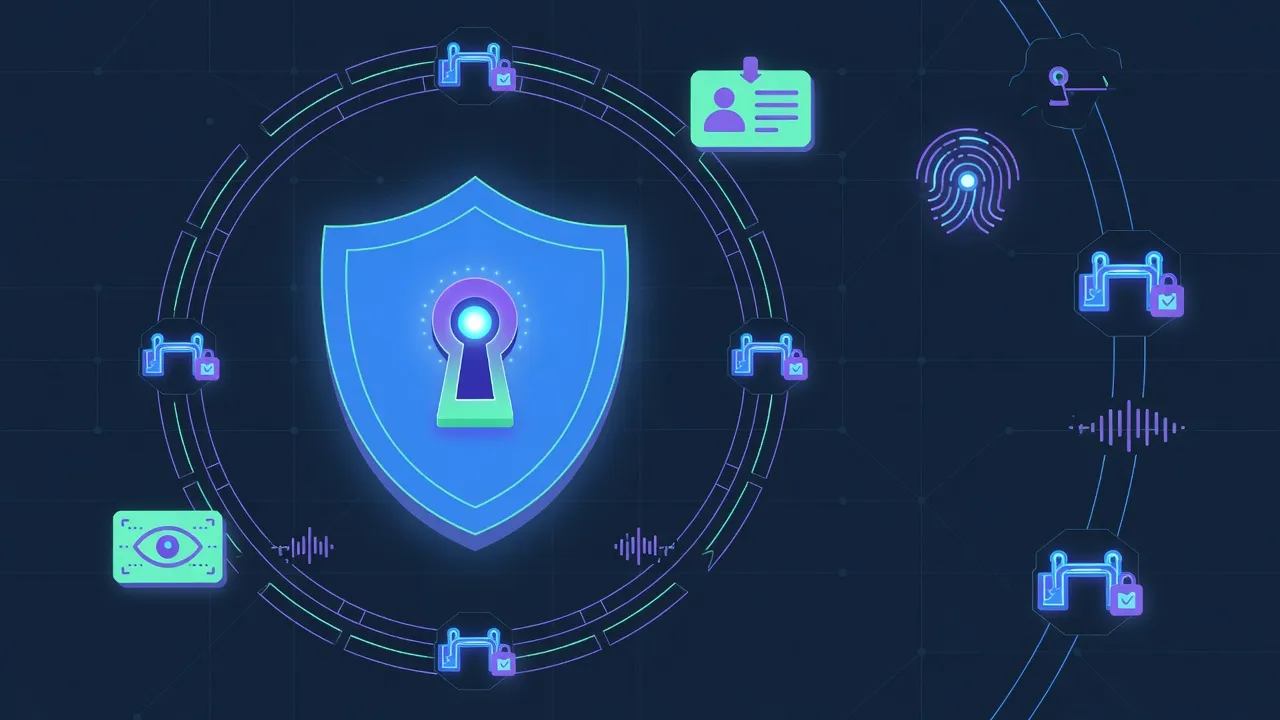
Perimeter Security Is Dead — What Comes Next?
Zero trust architecture has become the defining security model for modern enterprises, and for good reason. The traditional approach of building a strong perimeter and trusting everything inside it was designed for an era when employees worked in offices, applications ran on local servers, and data stayed within four walls. That era is over.
Remote work, cloud-native applications, API-driven microservices, and third-party integrations have dissolved the traditional network boundary. Your employees connect from coffee shops. Your data lives across three cloud providers. Your partners access your systems via APIs that traverse the open internet. In this reality, the question is not whether your perimeter will be breached — it is when.
According to IBM's 2025 Cost of a Data Breach Report, the average breach costs $4.88 million and takes 277 days to identify and contain. Organisations that had adopted zero trust principles reduced that cost by an average of $1.76 million. The numbers are clear: the old model is not just outdated — it is expensive.
The fundamental shift in zero trust thinking is this: stop trying to build a bigger wall. Instead, assume the attacker is already inside and design every system interaction accordingly.
If you are a business leader evaluating your organisation's security posture, this guide will walk you through what zero trust actually means, why it matters, and how to implement it without paralysing your operations.
What Is Zero Trust?
Zero trust is a security model built on one principle: never trust, always verify. Every user, device, application, and network flow must be authenticated, authorised, and continuously validated before being granted access to any resource — regardless of whether the request originates inside or outside the corporate network.
This is a deliberate departure from the "castle and moat" approach. In a traditional architecture, once a user passes through the firewall, they are broadly trusted. In a zero trust architecture, trust is never implicit. Every request is evaluated in context: Who is making the request? What device are they using? Is the device compliant? What resource are they accessing? Is this behaviour normal for this user?
The term was coined by Forrester Research analyst John Kindervag in 2010, but the model gained mainstream adoption after Google published its BeyondCorp framework in 2014, demonstrating that even one of the world's largest technology companies could operate without a traditional VPN-based perimeter.
Core Tenets of Zero Trust
- Verify explicitly: Always authenticate and authorise based on all available data points, including user identity, location, device health, service or workload, data classification, and anomalies.
- Use least-privilege access: Limit user access with just-in-time and just-enough-access (JIT/JEA), risk-based adaptive policies, and data protection.
- Assume breach: Minimise blast radius and segment access. Verify end-to-end encryption. Use analytics to get visibility, drive threat detection, and improve defences.
The 5 Pillars of Zero Trust
A comprehensive zero trust architecture addresses five interconnected pillars. Weakness in any one of them creates a gap that attackers can exploit. Understanding these pillars is the first step toward building a coherent implementation strategy.
1. Identity
Identity is the foundation of zero trust. Every access decision starts with verifying who is making the request. This means strong authentication (multi-factor at minimum), single sign-on for consistent policy enforcement, and continuous validation throughout a session — not just at login.
Modern identity platforms evaluate risk signals in real time. If a user authenticates from London at 9:00 AM and then appears to log in from Singapore at 9:15 AM, the system should challenge or block that second request automatically.
2. Devices
A verified user on a compromised device is still a threat. Device trust means assessing the security posture of every endpoint before granting access. Is the operating system patched? Is disk encryption enabled? Is endpoint detection and response (EDR) software running? Is the device managed or personal?
Device posture assessment should be continuous, not a one-time check. A laptop that was compliant this morning may have had its antivirus disabled by malware this afternoon.
3. Network
Traditional network security assumes that internal traffic is safe. Zero trust rejects this assumption entirely. Micro-segmentation divides the network into isolated zones, ensuring that even if an attacker gains access to one segment, they cannot move laterally to others.
Network policies should be defined by workload identity, not IP address. In a cloud-native environment, IP addresses are ephemeral — a security policy tied to an IP is fragile by design.
4. Applications
Applications are where business logic lives, and they are a prime target. Zero trust at the application layer means securing APIs with proper authentication and rate limiting, implementing web application firewalls (WAFs), managing secrets securely, and ensuring that application-to-application communication is mutually authenticated.
// Example: API middleware enforcing zero trust principles
import { defineEventHandler, createError, getHeader } from 'h3';
import { verifyToken, checkDevicePosture, evaluateRiskScore } from './security';

export default defineEventHandler(async (event) => {
  const token = getHeader(event, 'Authorization')?.replace('Bearer ', '');

  if (!token) {
    throw createError({ statusCode: 401, message: 'Authentication required' });
  }

  // Verify identity
  const identity = await verifyToken(token);

  // Verify device posture
  const deviceId = getHeader(event, 'X-Device-ID');
  const deviceTrusted = await checkDevicePosture(deviceId);

  if (!deviceTrusted) {
    throw createError({ statusCode: 403, message: 'Device does not meet security requirements' });
  }

  // Evaluate contextual risk
  const riskScore = await evaluateRiskScore({
    userId: identity.sub,
    ip: event.node.req.socket.remoteAddress,
    userAgent: getHeader(event, 'User-Agent'),
    resource: event.path,
  });

  if (riskScore > 0.8) {
    throw createError({ statusCode: 403, message: 'Access denied due to elevated risk' });
  }

  // Attach identity to event context for downstream handlers
  event.context.identity = identity;
});
Every API integration should enforce authentication, authorisation, input validation, and rate limiting as non-negotiable baseline controls.
5. Data
Data is ultimately what attackers are after. Zero trust data protection means classifying data by sensitivity, encrypting it at rest and in transit, applying access controls based on classification, and monitoring access patterns for anomalies.
Data loss prevention (DLP) policies should be automated and enforceable. If a user who normally accesses 50 records per day suddenly downloads 50,000, the system should flag and potentially block that action in real time.
Why Businesses Need Zero Trust Now
The urgency for zero trust adoption is driven by three converging forces that are not slowing down. Understanding these forces helps justify the investment to stakeholders who may view security as a cost centre rather than a business enabler.
The Breach Landscape Is Getting Worse
Ransomware attacks increased by 68% in 2025. Supply chain attacks — where attackers compromise a vendor to reach their true target — have become a preferred tactic for sophisticated threat actors. The attack surface is expanding faster than most security teams can monitor.
Compliance Pressure Is Increasing
Regulatory frameworks are increasingly requiring zero trust principles, even if they do not use the term explicitly. SOC 2 Type II, ISO 27001, GDPR, and industry-specific regulations like PCI DSS and HIPAA all demand controls that align naturally with zero trust: least-privilege access, encryption, audit logging, and continuous monitoring.
Cloud Adoption Has Changed the Game
When your infrastructure spans AWS, Azure, and Google Cloud, and your employees access SaaS applications directly from personal devices, the concept of a "network perimeter" becomes meaningless. Cloud-native architectures require cloud-native security models, and zero trust is the most mature framework available.
Info
According to Gartner, by 2026, 60% of enterprises will have adopted zero trust as a starting point for security — up from fewer than 10% in 2021. If you have not started, you are falling behind.
Implementation Roadmap: A Phased Approach
The biggest mistake organisations make with zero trust is treating it as a product you can buy and install. Zero trust is a strategy, and it requires a phased, pragmatic rollout. Attempting to transform everything at once is a reliable path to failure.
Phase 1: Identity and Access Management
Start here because identity is the control plane for everything else. If you cannot verify who is accessing your systems, no other security control will be effective.
Key actions:
- Deploy multi-factor authentication (MFA) across all users — not just administrators. SMS-based MFA is better than nothing, but hardware keys or authenticator apps are significantly more resistant to phishing.
- Implement single sign-on (SSO) to centralise authentication and make policy enforcement consistent.
- Adopt the principle of least privilege: users should have access only to the resources they need for their current role, and that access should be reviewed regularly.
- Implement just-in-time (JIT) access for privileged operations. Instead of granting permanent admin access, provide time-limited elevated permissions when needed.
# Example: AWS CLI command to create a role with time-limited session
aws sts assume-role \
  --role-arn arn:aws:iam::123456789012:role/AdminAccess \
  --role-session-name "jit-admin-session" \
  --duration-seconds 3600 \
  --serial-number arn:aws:iam::123456789012:mfa/user \
  --token-code 123456
Phase 2: Device Trust and Posture Assessment
Once you know who is connecting, you need to verify that their device is secure. This phase focuses on establishing a baseline of device health and enforcing it as a condition of access.
Key actions:
- Deploy endpoint detection and response (EDR) on all managed devices.
- Define device compliance policies: OS version, patch level, encryption status, security software presence.
- Integrate device posture checks into your identity provider so that authentication decisions consider device health.
- Develop a strategy for unmanaged devices (BYOD): consider virtual desktop infrastructure (VDI) or browser-based isolation for access from personal devices.
Phase 3: Micro-Segmentation and Network Policies
With identity and device trust in place, turn your attention to the network. Micro-segmentation limits lateral movement, ensuring that a breach in one area does not become a breach everywhere.
Key actions:
- Map your application dependencies and data flows before segmenting. You cannot segment effectively if you do not understand how your systems communicate.
- Implement network policies based on workload identity, not IP addresses.
- Start with your most sensitive workloads (financial systems, customer data, intellectual property) and expand outward.
- Use service mesh technologies in Kubernetes environments to enforce mutual TLS and fine-grained traffic policies between services.
Phase 4: Application-Level Security
Secure the applications themselves. This phase focuses on ensuring that your APIs, web applications, and internal tools are hardened against attack.
Key actions:
- Deploy API gateways with authentication, rate limiting, and input validation.
- Implement a web application firewall (WAF) for public-facing applications.
- Centralise secrets management. No more credentials in environment variables, config files, or (worst of all) source code.
- Ensure all service-to-service communication uses mutual TLS (mTLS).
Tip
When implementing secrets management, adopt a "secrets zero" approach: no application should store secrets locally. All credentials should be fetched from a centralised vault (HashiCorp Vault, AWS Secrets Manager, Azure Key Vault) at runtime.
Phase 5: Data Classification and Encryption
The final phase focuses on protecting the data itself. Even if every other control fails, properly classified and encrypted data limits the damage an attacker can do.
Key actions:
- Classify all data by sensitivity level (public, internal, confidential, restricted).
- Encrypt data at rest and in transit — with no exceptions.
- Implement data loss prevention (DLP) policies tied to your classification scheme.
- Monitor data access patterns and alert on anomalies.
- Ensure encryption key management follows best practices: keys should be rotated regularly and stored separately from the data they protect.
Common Pitfalls to Avoid
Zero trust implementations fail more often from organisational issues than technical ones. Knowing the common mistakes in advance can save you months of rework and significant budget.
Trying to Do Everything at Once
Zero trust is a journey, not a project. Organisations that attempt a big-bang transformation inevitably stall. Start with the highest-impact, lowest-friction changes (MFA, SSO) and build momentum. Quick wins create organisational buy-in for larger initiatives.
Ignoring Legacy Systems
Every organisation has legacy systems that cannot be easily retrofitted with modern security controls. Ignoring them creates a dangerous blind spot. Instead, isolate legacy systems in tightly controlled network segments, monitor their traffic aggressively, and plan for their eventual replacement.
Underinvesting in Training
The most sophisticated security controls are useless if employees circumvent them out of frustration or ignorance. Training should not be a once-a-year compliance exercise. Build security awareness into the daily workflow. Explain why controls exist, not just how to comply with them.
Neglecting the User Experience
Security that makes people's jobs significantly harder will be worked around. If your MFA flow adds 30 seconds to every login and your VPN drops connections every 15 minutes, users will find shortcuts. Design security controls that are as frictionless as possible while maintaining their effectiveness.
Failing to Measure and Iterate
Zero trust is not a destination — it is a continuous process. Establish metrics from day one: MFA adoption rate, mean time to detect anomalies, percentage of workloads with micro-segmentation, number of privileged access requests via JIT versus standing access. Use these metrics to guide your next phase.
Zero Trust and Compliance Alignment
One of the strongest business cases for zero trust is its natural alignment with major compliance frameworks. Rather than building separate controls for each compliance requirement, zero trust provides a unified architecture that satisfies multiple frameworks simultaneously.
SOC 2 Type II
SOC 2 requires demonstrable controls around access management, system monitoring, risk assessment, and data protection. Zero trust's emphasis on continuous verification, least-privilege access, and comprehensive logging directly satisfies SOC 2's Trust Services Criteria for Security, Availability, and Confidentiality.
ISO 27001
ISO 27001's Annex A controls map closely to zero trust pillars. Access control (A.9), cryptography (A.10), communications security (A.13), and operations security (A.12) are all addressed by a well-implemented zero trust architecture. The continuous monitoring aspect of zero trust also supports ISO 27001's requirement for ongoing risk assessment.
GDPR
GDPR mandates that organisations implement "appropriate technical and organisational measures" to protect personal data. Zero trust's data classification, encryption, access controls, and audit logging provide a robust technical foundation for GDPR compliance. The principle of data minimisation aligns naturally with least-privilege access.
| Compliance Framework | Key Zero Trust Alignment |
|---|---|
| SOC 2 Type II | Access controls, monitoring, encryption, audit logging |
| ISO 27001 | Risk management, access control, cryptography, incident response |
| GDPR | Data protection, access controls, breach detection, audit trails |
| PCI DSS | Network segmentation, encryption, access management, monitoring |
| HIPAA | Access controls, audit controls, integrity controls, transmission security |
Tip
When building your compliance case for zero trust, frame it as a consolidation effort. Instead of maintaining separate control sets for SOC 2, ISO 27001, and GDPR, zero trust gives you a single architecture that satisfies all three — reducing audit complexity and ongoing maintenance costs.
The Business Case for Zero Trust
Beyond compliance and risk reduction, zero trust delivers tangible business benefits that resonate with executive leadership.
Reduced breach costs: Organisations with mature zero trust implementations save an average of $1.76 million per breach compared to those without. Over a five-year period, the expected value of avoided breach costs typically exceeds the implementation investment.
Faster incident response: With micro-segmentation and comprehensive logging, security teams can identify and contain incidents in hours rather than weeks. The blast radius of any single breach is dramatically reduced.
Enabling business agility: Paradoxically, stricter security can make your organisation more agile. When you have confidence in your identity, device, and network controls, you can safely enable remote work, cloud adoption, and third-party integrations without the lengthy security reviews that slow down traditional organisations.
Simplified IT operations: Centralised identity management, automated device compliance, and policy-driven network controls reduce the manual overhead of security operations. Teams spend less time managing VPN configurations and firewall rules, and more time on strategic initiatives.
Getting Started: Your First 90 Days
If you are starting from scratch, here is a practical timeline for the first 90 days of your zero trust journey.
Days 1-30: Assessment and planning. Conduct a thorough inventory of your users, devices, applications, and data. Identify your highest-value assets and most critical data flows. Map your current security controls against zero trust principles to identify gaps.
Days 31-60: Quick wins. Deploy MFA across all user accounts. Implement SSO for your top 10 most-used applications. Begin device inventory and establish baseline compliance policies. Start planning your micro-segmentation strategy.
Days 61-90: Foundation building. Roll out endpoint detection and response. Implement conditional access policies that combine identity and device signals. Begin pilot micro-segmentation with your most sensitive workloads. Establish monitoring and metrics to track progress.
This is just the beginning. A full zero trust transformation typically takes 18-24 months for a mid-sized organisation, but the incremental benefits start accruing from day one.
Strengthen Your Security Posture with CNEX
Zero trust is not optional — it is the security model that modern businesses require. Whether you are just beginning to evaluate your options or you are midway through an implementation that has stalled, our security team can help you move forward with confidence.
We specialise in designing and implementing zero trust architectures for organisations running cloud-native infrastructure, complex API ecosystems, and hybrid environments. Our approach is practical, phased, and tailored to your business — not a one-size-fits-all framework.
Ready to assess your current architecture against zero trust principles? Talk to our security team and let us help you build a security posture that matches the threats of today — not the assumptions of a decade ago.
Written by
CNEX Team
Building the next generation of enterprise software at CNEX. Passionate about AI, cloud-native architecture, and elegant solutions to complex problems.
Related articles
How Auckland Clinics Lose Bookings Between 5pm and 9am (With the Maths)
Most Auckland clinics only answer the phone for about a quarter of the week. Here's the maths on what that costs, the four common leak points, and what to fix before you buy anything.
What an AI Receptionist Actually Costs in NZ (2026) — and When It's Worth It
Real subscription and done-for-you pricing from named NZ/AU providers, the hidden costs nobody quotes, a worked example for a clinic and a builder, and when you shouldn't buy one at all.
Why Most NZ Businesses Lose the Leads They Already Paid For
You're spending money to generate leads. But if your follow-up is broken, you're paying for enquiries that go nowhere. Here's what's actually happening — and how to fix it.